


AI Interview Agents and Unmoderated Research: The New Era of Consumer Insights

The rise of the AI interview agent is reshaping how companies capture and understand consumer insights. By blending conversational artificial intelligence with automated research methods—such as unmoderated and self-paced studies—brands and agencies can collect data faster, reduce costs, and uncover deeper trends than ever before.
We’re taking a deeper look into how AI interview agents work, why unmoderated research is gaining traction, and how marketing teams can leverage these innovations to make smarter, more agile decisions.
What Is an AI Interview Agent?
An AI interview agent is a conversational AI tool capable of conducting real-time or asynchronous interviews. Unlike a traditional human moderator, these intelligent agents can:
- Ask Adaptive Questions: They respond dynamically to participant answers, probing deeper where it matters.
- Detect Sentiment and Tone: Using natural language processing (NLP), they identify emotion, hesitation, or enthusiasm.
- Provide Instant Transcripts and Key Themes: Responses are automatically transcribed, organized, and summarized.
Because they’re autonomous, AI interview agents can run 24/7, reaching participants across time zones without scheduling hurdles. For global brands, this around-the-clock availability means insights are no longer limited by geography or office hours.
Traditional vs. AI-Moderated vs. Unmoderated Research
Market research has evolved through three main stages:
1. Traditional Moderated Research
Human moderators conduct in-person or virtual interviews and focus groups, guiding the conversation and taking notes. While rich in qualitative detail, this method is labor-intensive and time-consuming.
2. AI-Moderated Research
AI interview agents co-moderate or even fully moderate sessions, reducing human workload while increasing consistency. Researchers can oversee multiple projects simultaneously and focus on higher-level analysis.
3. Unmoderated Research
Participants complete tasks or answer questions at their own pace, often on mobile or web platforms, while AI captures and analyzes their responses. No live moderator is required, making studies highly scalable.
By combining AI-moderated and unmoderated research, brands gain speed and reach without sacrificing data quality.
Key Benefits of AI Interview Agents
AI interview agents provide marketers and researchers with distinct advantages:
- Speed & Scale: Conduct hundreds of interviews simultaneously across different markets.
- Cost Efficiency: Reduce expenses tied to scheduling, travel, and human moderators.
- Data Depth: Capture emotional cues, subtle language shifts, and hidden patterns with machine learning.
- Reduced Bias: Automated, standardized questioning minimizes moderator influence and maintains consistency.
These benefits translate into more agile marketing decisions and dramatically faster time-to-insight—often turning weeks of work into just days.
Self-Paced and Unmoderated Research in Action
Unmoderated research empowers participants to complete studies on their own time, creating a more natural and flexible environment. AI agents then analyze responses, flag anomalies, and highlight emerging themes without human intervention.
Practical applications include:
- Concept Testing: Evaluate new product ideas, packaging, or ad campaigns before committing to a major launch.
- User Experience (UX) Research: Collect feedback across different devices and markets to identify friction points in digital experiences.
- Message Optimization: Test multiple marketing messages or taglines quickly to discover what resonates best.
Because participants can engage at their convenience, completion rates often improve, and the data reflects authentic, in-the-moment opinions.
Real-World Examples
Many leading brands are already integrating AI interview agents into their insight strategies:
- A global beverage company uses AI-driven unmoderated interviews to refine packaging designs, cutting testing cycles from weeks to days.
- A SaaS provider deploys AI interview agents to gather post-onboarding feedback in multiple languages, ensuring customer concerns are addressed within 24 hours.
- Consumer electronics brands leverage AI sentiment analysis to track user satisfaction after product launches, identifying potential issues before they escalate.
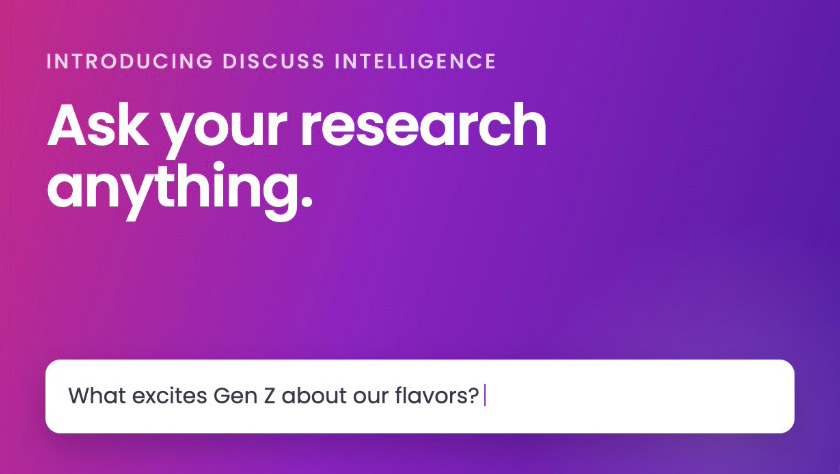
Platforms like Discuss.io showcase how AI interview agents and unmoderated studies can work together to deliver these kinds of results. (See the Discuss.io platform overview for more details.)
Integrating AI Agents into Your Workflow
Marketing and research teams can follow these steps to successfully deploy AI interview agents:
- Define Research Objectives
Clarify the decisions the research will inform—such as product improvements or campaign messaging. - Select the Right Platform
Look for agentic AI features like adaptive questioning, sentiment detection, and multilingual support to match your audience. - Pilot a Small Study
Start with a limited test to ensure accuracy, participant comfort, and seamless data integration. - Scale and Monitor
Expand to larger projects while tracking agent performance and refining as you go. Regular monitoring ensures ongoing accuracy and compliance with privacy standards.
Overcoming Common Challenges
While AI agents bring efficiency, teams should plan for:
- Data Security and Privacy: Ensure platforms comply with regulations like GDPR or CCPA.
- Participant Comfort: Provide clear instructions and support to build trust in AI-led interviews.
- Human Oversight: Maintain a feedback loop so researchers can intervene or refine questions when needed.
Addressing these considerations upfront helps maintain quality and participant engagement. As AI becomes a larger part of our lives, participants can usually feel the difference when there’s a lack of human moderation.
Looking Ahead: AI Interview Agents on the Rise
AI interview agents are just getting started, and the next wave is going to feel almost effortless. Before long, these smart tools will be able to:
- Shape the research plan from scratch – drafting questions and mapping out workflows with only light guidance.
- Find the right participants automatically – pulling from connected databases to match exactly who you need to hear from.
- Turn data into next steps fast – offering clear insights and recommended actions almost as soon as the interviews wrap.
As these capabilities expand, the gap between collecting data and making decisions will shrink, leaving researchers free to focus on strategy, creative thinking, and storytelling. This seamless integration of AI and data science, driven by the humans who can guide the decision making process and interpret the data, will give companies the edge over their competitors, plus make data more accurate than ever before.
Smarter Consumer Insights
AI interview agents and unmoderated research are revolutionizing how organizations gather and act on consumer insights. By adopting these tools, brands and agencies can reduce costs, accelerate timelines, and unlock richer qualitative data that drives confident decision-making.
Explore how Discuss.io’s AI-powered solutions bring these capabilities to life. Request a demo to see how AI interview agents can transform your market research and give your team a powerful edge.
Ready to unlock human-centric market insights?
Related Articles

Are Synthetic Respondents Reliable for Market Research? What Insights Teams Need to Know
Publish date: June 2026 Jill Postoak, Senior Director of Product Marketing, Discuss Synthetic respondents can be reliable. They can also…
Publish date: June 2026 Jill Postoak, Senior Director of Product Marketing, Discuss Synthetic respondents can be reliable. They can also…

The Four Lies We Tell Ourselves About AI Interviews (And What Actually Works)
By Jilleun Eglin, Executive Director, Product Last updated: May 2026 Key takeaways: AI-moderated interviews are having a moment. Everyone’s talking…
By Jilleun Eglin, Executive Director, Product Last updated: May 2026 Key takeaways: AI-moderated interviews are having a moment. Everyone’s talking…

Holiday Campaigns Meet Agentic AI: How Intelligent Agents Drive Last-Minute Creative Testing
Every marketer knows the feeling — it’s November, the holidays are around the corner, and your campaign calendar is bursting….
Every marketer knows the feeling — it’s November, the holidays are around the corner, and your campaign calendar is bursting….