


How to Operationalize the Insights Librarian Role and Stop Insights Slop
By Daniel Graff-Radford, CEO, Discuss
Last updated: July 2026
Summary: Most organizations waste millions of dollars researching questions they already have the answer to. The problem is that they have years of research sitting in reports no one can find. The solution is to put all of your research in one queryable dataset. In a recent Greenbook article, I argued that the best researchers play the role of librarian, connecting their organizations to answers they already own. Pavi Gupta gave the failure mode a name: insights slop. Here’s how to operationalize the librarian role so slop never accumulates.
When I wrote for Greenbook that the best researchers have always played the role of librarian, the sharpest line came from the response, not the article. Pavi Gupta, founder of The Insights Exchange and a board member at MRII, read the piece and named the problem the librarian exists to solve. He called it “insights slop”: funding new research to answer questions you have already paid to answer. The phrase spread because insights leaders recognized it immediately. This article picks up where the Greenbook piece left off, moving from defining the librarian role to operationalizing it.
TL;DR
- Discuss Intelligence is the always-on workspace that scales the insights librarian role across an entire organization.
- Insights slop is funding new research to answer questions you have already paid to answer.
- The insights librarian is the antidote: someone, or something, whose job is to know what the organization already knows.
- Operationalizing the role takes three moves: capture what you already own, make it queryable, and route the answer to the right person.
- Discuss Intelligence performs the librarian role at organizational scale, turning every past study into an instant, sourced answer.
- The budget question worth asking: how much of this year’s research spend went to answers you already had?
“Insights slop: funding new research to answer questions you’ve already paid to answer.”
– Pavi Gupta, Founder, The Insights Exchange and MRII board member.
What is insights slop?
Insights slop is what happens when an organization pays to answer a question it has already answered. Pavi Gupta coined the term after reading my Greenbook article, and it landed because “slop” usually points at AI. Here it points at us instead, and the waste is entirely human. A study gets commissioned because no one could find the study that already exists.
It also shows up in a newer way. Startups selling point solutions have made research so easy to spin up that five teams can each run their own version of the same question in a single week, none of them aware the answer was already sitting in a folder, or in a neighboring team’s dashboard, the whole time. Same slop, moving faster.
The root cause is the same in both cases. Research does not accumulate. Each study closes, gets filed, and stops working, so the next question starts from zero.
Why does the insights librarian role prevent it?
The librarian is the person who can look across years of accumulated knowledge and say, “We already studied this. Let me connect the dots for you.” A senior insights leader at a consumer goods company gave me that framing, and it stuck because it names something the industry has talked around for years.
The librarian is strategic. She is the reason the new CMO’s question about price sensitivity gets answered in an afternoon instead of a quarter. She is the reason the budget does not get spent twice.
The catch, which I wrote about in the Greenbook piece, is that the role never scaled. One person’s institutional memory covers a few years of work, if she is exceptional and if she stays long enough. When she leaves, the memory leaves with her. That is the distance between knowing the librarian role matters and being able to operate on it every day.
How do you operationalize the librarian role at scale?
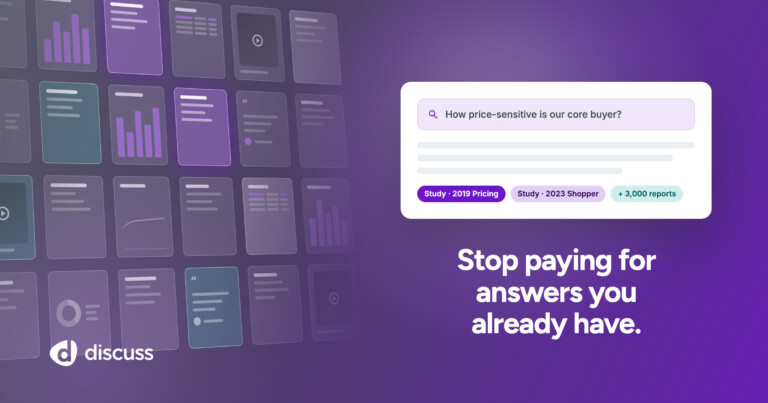
Start by capturing what you already own. One brand insights team I met at our April roundtable in New York did this bluntly. They offered a $100 gift card to anyone who uploaded a legacy report, and in six months, 3,000 reports went into the system. From there, they indexed 15,000 documents with an internal model, and brand managers could self-serve answers that used to require a two-week research cycle.
That story is the whole operating model in miniature, and it comes down to three moves:
Capture what you already own, so the knowledge lives in one place instead of scattered across drives and the memories of people who have left.
Make it queryable, so anyone can ask a question in plain language and get a sourced answer instead of a folder to dig through.
Route the answer by role, so a president gets the strategic version and a brand manager gets the tactical one, both drawn from the same underlying research.
Most teams stall on the first move because it looks like a records project instead of the strategy project it actually is. Capturing what you already know is the difference between research that compounds and research that evaporates.
How does Discuss Intelligence scale the insights librarian role?
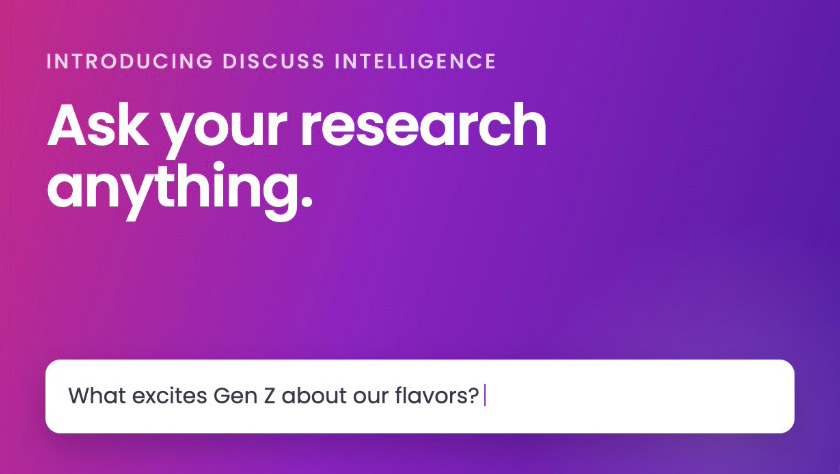
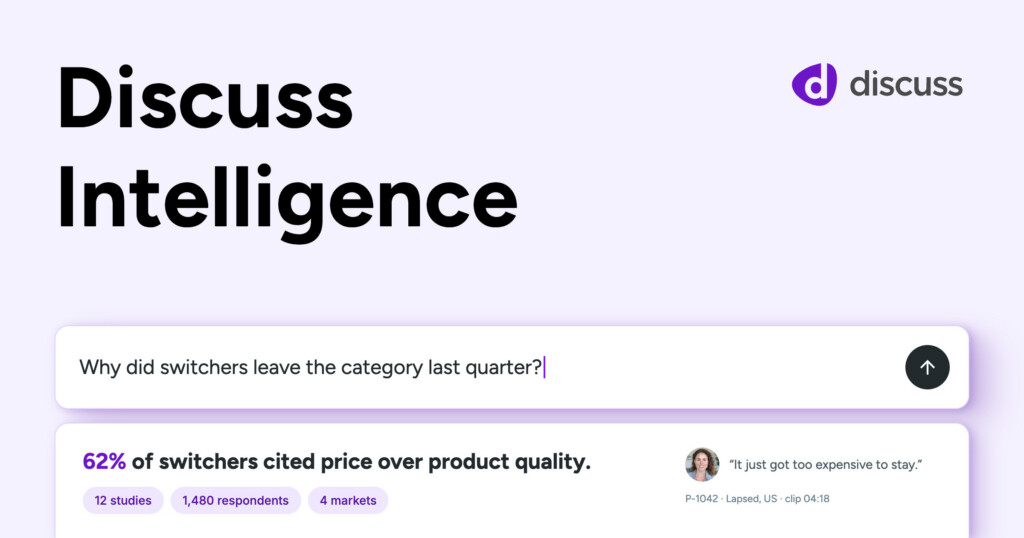
The gap I heard about in New York stuck with me: one exceptional person carrying years of institutional memory that could evaporate the day she left the company. Discuss Intelligence is what we built to close that gap. It takes every study an organization has ever run, wherever it lives, and turns it into a workspace anyone can ask a question of in plain language. The answer comes back sourced, quantifiable, and traced to the original participant, segment, and study. Nobody has to know which analyst ran which project three years ago. The system already knows.
Building this took years of processing real conversation data at a scale most research companies have never touched. OpenAI recognized Discuss as the only market research company operating at frontier AI scale, more than 10 billion tokens of conversation data, and Forrester™ named us a Leader in its Q1 2026 Experience Research Platforms Wave. That depth of experience is why our AI can tell the difference between a tidy summary and an answer a leader would actually defend in a room full of skeptics.
Two customers make this concrete for me. Danone told us they gained more consumer understanding in six months than in the previous six years, and used our AI agents to answer more than 600 business questions along the way. HelloFresh took a 24-hour research cycle down to 24 seconds. That is the librarian role, running at a scale no single person could reach alone.
The full capability is on the Discuss Intelligence product page, if you want to see it firsthand.
How much of your research budget is insights slop?
Here is the question I would put to any insights leader reading this: what percentage of your research spend this year went to questions your organization had already paid to answer?
Most people cannot say, which is part of why the problem persists. The studies get commissioned, the reports get filed, the platform changes or the team turns over, and the budget line stays intact while the knowledge drops out of circulation. Dexcom put it plainly: with the right infrastructure in place, they got 10 times the insights for the same budget. The money that was going to redundant research goes to the questions that are genuinely new.
The librarian role has always been strategic. What is new is that you can finally run on it.
Frequently asked questions
What is insights slop? Insights slop is funding new research to answer questions your organization has already paid to answer. The term was coined by Pavi Gupta, founder of The Insights Exchange and a board member at MRII in response to Daniel Graff-Radford’s Greenbook article on the insights librarian role.
How do I prevent insights slop? Capture the research you already own, make it queryable in plain language, and check what you already know before commissioning a new study. Discuss Intelligence does this across every study an organization has ever run.
Is a research repository enough to stop insights slop? No. A repository stores research and still requires you to know what you are looking for and where it lives. Preventing insights slop takes a system that finds the relevant studies automatically and returns a sourced answer across all of them.
How is Discuss Intelligence different from a research repository? A repository stores research. Discuss Intelligence makes it answer back. It finds the relevant studies across your organization, synthesizes a quantifiable answer, and traces every claim to the original participant, segment, and study.
Kirsten Nantz, our SVP of Product, has written the full product explainer. If you want to understand exactly how it works, start with her blog: What Is Discuss Intelligence. For full product details, visit the Discuss Intelligence product page.
See how Discuss Intelligence scales the librarian role across your organization. Request a demo →
Ready to unlock human-centric market insights?
Related Articles
What Is Discuss Intelligence? How Discuss Turns Your Entire Research Library Into an Always-On Intelligence Layer
By Kirsten Nantz, SVP of Product, Discuss Last updated: July 2026 Discuss Intelligence is Discuss’s AI-powered research intelligence capability. Ask…
By Kirsten Nantz, SVP of Product, Discuss Last updated: July 2026 Discuss Intelligence is Discuss’s AI-powered research intelligence capability. Ask…

How to Evaluate AI Research Tools and Prove Their ROI: What Insights Teams Get Wrong
By Cayleigh McCarthy, VP of Global Customer Success, Discuss Published June 2026 Key takeaways: At IIEX North America in April…
By Cayleigh McCarthy, VP of Global Customer Success, Discuss Published June 2026 Key takeaways: At IIEX North America in April…

How to Get the Most Out of AI-Moderated Interviews: A Practical Guide for Qualitative Researchers
By Jill Postoak, Senior Director of Product Marketing, Discuss Last updated: June 2026 Discuss is the AI-powered qualitative and quantitative…
By Jill Postoak, Senior Director of Product Marketing, Discuss Last updated: June 2026 Discuss is the AI-powered qualitative and quantitative…