


The New Research Contract
Executive Point of View — 2026
How Marketing and Insights can move faster without growing further apart
A point of view informed by qualitative research with senior marketing leaders using Discuss.
Recruitment partner: Ivy Exec
discuss.io
Why We Commissioned This Research
Marketing has always depended on customer insights to make better decisions. What changed is the pace those decisions demand now. Campaigns shift in days. Competitors move overnight. AI can summarize a stack of interviews in minutes, and that speed has reset what marketing teams expect from research itself.
Most organizations are still running a research model built for a slower business.
To understand that gap, Discuss commissioned qualitative interviews with 20 senior marketing leaders across global brands. We wanted to know:
- How marketing leaders view the role of consumer insights today
- Where today’s research model helps—and where it gets in the way
- How AI is resetting expectations for Marketing and Insights alike
One answer came up again and again.
“Marketing and Insights need to redefine how they work together.”
Adopting AI is the easy part.
Why the Old Contract No Longer Works
For years, the relationship between Marketing and Insights followed one pattern. Marketing raised the business question. Insights designed the study, gathered the evidence, and delivered the recommendation. That model still works for foundational decisions: segmentation, positioning, major innovation bets, long-term strategy.
But marketing doesn’t run on one speed anymore. Plenty of decisions can’t wait weeks for an answer, and that pressure is reshaping what each side expects from the other.
Marketing Can’t Always Wait
None of the leaders we interviewed doubted the value of customer research. They described it as core to growth, brand strategy, innovation, campaign performance, and retention.
What changed is the clock.
“There’s way more pressure to move quickly. We aren’t afforded that time anymore.” — Marketing Leader, Global Brand
Marketing still wants the evidence. It just can’t wait weeks to get it.
Customer Knowledge Exists. Access Doesn’t.
Nearly every participant described some version of the same problem: the organization already knows more than it can use.
Research sits in SharePoint folders, agency decks, old presentations, and the heads of people who happened to be in the room. Finding an existing answer usually means asking around before anyone thinks to search.
That’s how the same study gets funded twice while decisions wait on work that already exists.
For many organizations, better access to existing research would solve more problems than another study ever could.
AI Has Changed Expectations
Marketing leaders are already using AI for real work: summarizing interviews, spotting themes across feedback, drafting first-pass takeaways.
Almost none of them are ready to hand judgment over to it. Most described a “trust, but verify” approach: let AI take the first pass, then check it against what they know.
AI’s real job is clearing away the friction—the retrieval and the summarizing—so researchers spend their time on interpretation and context instead.
The New Research Contract
This goes deeper than adopting new technology. Marketing and Insights are renegotiating what they expect from each other.
Marketing commits to:
- Distinguishing between decisions that need new research and decisions that need better access to what already exists
- Treating AI as an accelerator, not a substitute for judgment
- Bringing Insights into big decisions early, not just when a project kicks off
- Balancing speed with the discipline that high-stakes decisions still require
Insights commits to:
- Making customer knowledge easier to discover, reuse, and apply
- Supporting multiple research speeds instead of a single standard process
- Spending less time retrieving information and more time interpreting it
- Measuring success by the quality of business decisions, not the number of completed projects
Neither team can fix this alone. The partnership has to get stronger. A faster handoff won’t do it.
Questions Worth Discussing
Every organization will answer these differently. That’s the point.
For your Insights leader:
- When Marketing needs an answer within 48 hours, what happens today?
- How often are we repeating research we’ve already funded?
- How searchable is our existing customer knowledge?
- Which decisions truly require new research?
- If AI reduced administrative work, where would you want your team investing more time?
For your Marketing team:
- Where are we relying on instinct because research takes too long?
- What customer questions come up repeatedly?
- How are teams already using AI to accelerate their work?
- How do we validate AI-generated conclusions before acting on them?
- What do we learn on every project that disappears the moment it ends, instead of becoming institutional memory?
Where Does Your Organization Stand?
Consider which statements best describe your organization today.
Traditional
- Research is organized around projects.
- Marketing requests insights.
- AI is experimental.
- Success is measured by completed research.
Transitioning
- Research is becoming easier to search and reuse.
- Marketing can answer some questions independently.
- AI supports selected workflows.
- Success is measured by adoption and reuse.
Emerging
- Customer knowledge compounds over time.
- Marketing and Insights share responsibility for improving decisions.
- AI accelerates access while humans provide governance and judgment.
- Success is measured by better business decisions.
Most organizations live somewhere between columns. The question isn’t where you are. It’s what changes next.
Getting More From What You Already Have
The organizations that win the next decade will get more value from the research they already have.
That takes new technology, but the real shift is bigger: a genuine partnership where Marketing and Insights share responsibility for how customer knowledge gets built, spread, and used.
That’s the new research contract.
About This Research
This report draws on qualitative interviews with 20 senior marketing leaders. Research conducted by Julie Katz, founder of Boundful, an independent research and strategy consultancy. Boundful explores complex human questions and translates insight into practical direction. Participants were recruited in partnership with Ivy Exec.
Ready to unlock human-centric market insights?
Related Articles

From Resolution to Reality: How Human-Led AI Research Shapes Smarter 2026 Growth Strategies
Every January Starts With the Same Question: “Are We Doing This Right?” January has a particular energy inside organizations. New…
Every January Starts With the Same Question: “Are We Doing This Right?” January has a particular energy inside organizations. New…
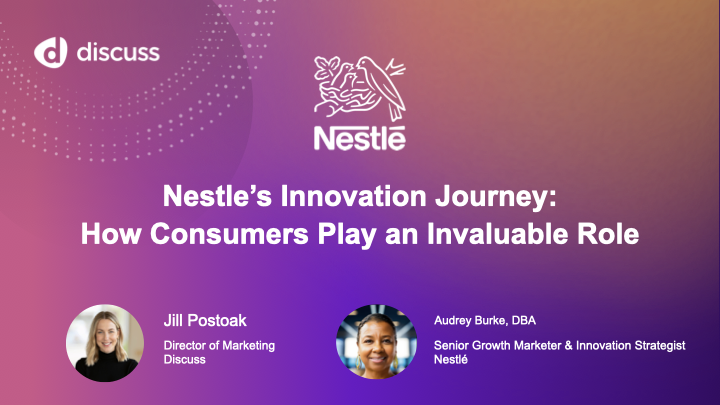
Nestlé’s Accelerator Shows What Happens When the Whole Company Listens
By Jill Postoak, Director of Marketing, Discuss When I joined Nestlé’s Audrey Burke on stage recently at the Insights Association’s…
By Jill Postoak, Director of Marketing, Discuss When I joined Nestlé’s Audrey Burke on stage recently at the Insights Association’s…

Predictive Agentic AI for Campaign Testing: Forecasting Success Before Launch
Imagine being able to predict how your next marketing campaign will perform—before you spend a dollar on media. That’s the…
Imagine being able to predict how your next marketing campaign will perform—before you spend a dollar on media. That’s the…