




Virtual Personas: How AI-Driven Consumer Simulations Are Revolutionizing Market Research
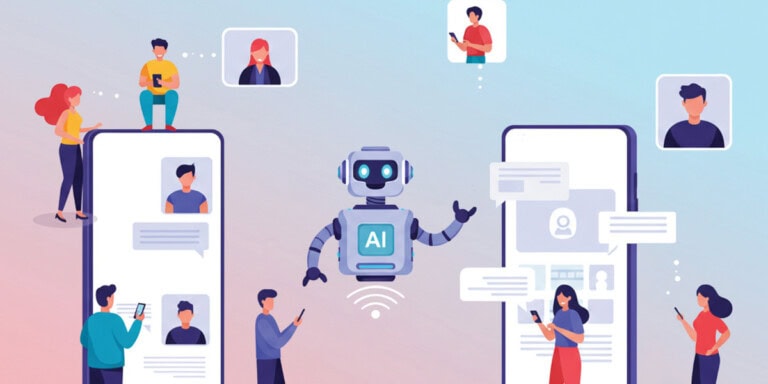
In a world where consumer behaviors shift faster than ever, brands and research teams are seeking smarter, faster ways to understand people—not just what they say, but how they act, respond, and decide. Enter virtual personas—advanced AI-driven simulations of consumers built from real behavioral, demographic and psychographic data.
These virtual personas enable brands to test campaigns, map journeys, model decision-making and generate insights before launching in the real world. In this post, we’ll unpack what virtual personas are (and how they differ from traditional audience segments), how they’re built, the practical applications in market research, ethical considerations, and what the future holds. We’ll also explain how your team can tap into platforms like Discuss.io to get ahead of the curve.
What are Virtual Personas — and how do they differ from traditional segments?
A “virtual persona” is an AI-powered, dynamic representation of a consumer (or small group of consumers) that simulates how that person behaves, reacts, and makes decisions. Unlike a static demographic or psychographic segment (for example: “Women 25-34, urban, interested in wellness”), a virtual persona embodies:
- behavioral data (how she has acted)
- psychographic traits (what motivates her)
- real-world context (environment, triggers, constraints)
- simulated decision-making pathways
In effect, you’re not just grouping people by broad characteristics—you’re modelling how a specific type of consumer might act, in a way that allows experimentation.
Traditional audience segments remain incredibly valuable—but they tend to describe groups rather than simulate behavior. Virtual personas enable you to ask things like: “If this specific type of person sees this message at this time, how likely are they to respond this way?” or “Before we roll out our campaign, how might this virtual persona feel, behave or decide?”
As such, virtual personas represent a step forward in consumer research agility and depth.
How virtual personas are built: The anatomy of the model
Building a virtual persona involves several critical components:
- Data collection: Behavioral data (past purchases, interactions, website clicks, responses), demographic/psychographic data (age, income, attitude, motivations), contextual data (time, place, environment).
- AI modelling: Algorithms ingest that data and build simulation models that represent decision-making processes—what triggers the consumer, how they reflect, how they act.
- Contextual learning: The system integrates real-world context (for example: “she is shopping while on her phone after 8 pm”, or “he sees a social ad then visits a store”) so that the virtual persona doesn’t live in isolation but in a scenario.
- Simulation & iteration: You then run experiments with your virtual persona—exposing it to a campaign, a packaging change, a messaging variant—and observe how it “behaves”. Because it’s a model, you can iterate, test many variants, and ultimately compare outcomes.
- Insights and calibration: The results of the simulation are turned into insights: what triggered the persona, what blocked them, what journey they followed—and you can refine the model over time as new data comes in.
When combined with modern research platforms, this becomes a very powerful tool. For example, on the Discuss.io platform you can integrate human-led interviews, AI agents, asynchronous feedback and upload previous research—so you can feed richer data into your persona modelling. (Discuss)
Practical applications in market research
Here are some of the ways virtual personas are being used (or soon will be) across marketing and market research:
- Concept testing: Before launching a new product or ad campaign, test how your virtual persona reacts. What message resonates? What barrier emerges?
- Customer journey mapping: Use a virtual persona to simulate the path from awareness → consideration → purchase → advocacy, allowing marketers to spot friction points.
- Predictive behavior modelling: Want to know how a new consumer cohort might respond to a price change or packaging shift? The simulation helps you forecast the impact.
- Synthetic audiences: Instead of recruiting large numbers of human respondents every time, you can use virtual personas to conduct agile “what-if” tests quickly, then validate with real audiences.
- Adaptive insights: Because you can iterate quickly, you build a library of virtual personas that evolve as consumer behavior shifts—allowing you to stay ahead of trends rather than reacting after the fact.
By using a platform like Discuss.io, which supports human-led sessions, AI-led interviews and merged data across regions and languages, you can both build and validate virtual personas more efficiently. Learn more about success with implementation from our customer stories.
How virtual personas tie into your qualitative research strategy
One of the strengths of a platform like Discuss.io is that it supports the full research lifecycle—Prepare, Ask, Analyze. Here’s how virtual personas fit into that lifecycle:
- Prepare: Use your existing human-led interview data (via Discuss) to identify consumer behaviors, motivations, language, barriers.
- Ask: Conduct additional human-led or AI-led sessions to fill specific gaps—for example a new demographic or behavior pattern.
- Analyse: Use AI tools (such as the Insights Agent on Discuss) to surface themes, quotes, and behaviors, then feed those findings into the virtual persona model.
- Simulate: Run experiments with your virtual persona—simulate reactions, decisions, pathways.
- Validate: Bring in real participants (again via the platform) to test the simulation’s outcomes, refine, and repeat.
By aligning virtual personas with your qualitative research platform you reduce guesswork and increase agility. Instead of waiting weeks or months for test results, you can iterate more rapidly while still anchoring in real human insights.
Ethical considerations and data privacy
With great power comes great responsibility—and virtual personas are no exception. Here are some things to keep front-of-mind:
- Data privacy: The data used to build virtual personas must be handled with care—especially where behavioral or personal data is involved. Platforms like Discuss highlight global compliance, closed-loop AI systems and strong privacy controls.
- Transparency: When using simulated personas, it’s important to be transparent within your organization about the assumptions and limitations. A simulation is helpful—but it is not a replacement for real humans.
- Bias risk: Your model is only as good as your data. If certain behaviors or groups are under-represented in the data, the virtual persona may be skewed. Regular validation with real audiences is critical.
- Ethical simulation use: The goal is to understand and serve consumers, not manipulate them unfairly. Brands should be mindful of how they use simulated insights—for example, avoiding strategies that exploit undue influence or misinformation.
- Human-centredness: Remember that virtual personas should augment, not replace, human connection and empathy. Real consumers have emotions, context and experiences beyond what even sophisticated models can capture.
What’s next for virtual personas and market research?
The world of virtual personas is evolving rapidly. Here are some forward-looking trends to keep an eye on:
- Integration with AI agents: Imagine virtual personas that don’t just simulate consumption, but also interact—virtually chatting, responding to messaging, adapting over time. Brands could test conversational experiences using a virtual persona.
- Continuous, adaptive modelling: As more real-time consumer data becomes available (from digital behaviour, IoT devices, connected experiences), virtual personas will update dynamically—becoming more like “living” models of consumers.
- Cross-channel simulation: Virtual personas will navigate not just one channel, but an entire ecosystem (mobile app → retail store → social media → IoT device) enabling brands to test multi-touch journeys.
- Automated research link-up: Platforms like Discuss.io already support human-led, AI-led and uploaded research. The next step is seamless integration where insights from each feed directly into the persona model, enabling research-to-simulation pipelines.
- Democratised access: As modelling tools become more accessible, more teams (not just large enterprise research groups) will be able to build, run and benefit from virtual personas, making consumer simulation part of everyday insight strategy.
Why your team should get started now
If you’re still relying solely on traditional segments, static consumer profiles or lengthy test phases, now is an ideal time to adopt virtual personas as part of your research toolkit. Here’s why:
- You’ll gain speed—simulate responses before doing full rollouts.
- You’ll gain depth—move beyond “what people say” to “how people behave”.
- You’ll gain agility—iterate quickly, test scenarios in virtual space.
- You’ll still maintain human-centred insight, by anchoring your modelling on real qualitative research.
And when you integrate this with a platform purpose built for qualitative research—such as Discuss.io—you ensure your virtual persona strategy is grounded in real human voices and scalable research workflows. You’ll connect the dots between human insight and simulation, giving your brand a stronger competitive edge.
Move faster in a dynamic and changing environment
Virtual personas represent a frontier shift in market research: where data, AI and human insight converge to create models of consumer behavior that you can actively engage, test, adapt. They do not replace the value of connecting with real consumers—but they augment it: helping you move faster, test smarter and anticipate responses in a dynamic world.
If your insight team is looking to evolve, embrace continuous learning, reduce time-to-insight and scale human understanding, then virtual personas are a strategic move. And by leveraging a unified qualitative research platform like Discuss.io you can build, validate and operationalize these simulations in a way that stays rooted in real human voices and behaviors.
Let’s turn the question from “What will consumers do?” to “How will they behave?” – with confidence, precision and speed.
Ready to unlock human-centric market insights?
Related Articles
Research Reinvented: Forrester on why researchers won’t be replaced by AI
This is the last article in our five-part series based on the webinar we hosted with Forrester and Quadrant Strategies,…
This is the last article in our five-part series based on the webinar we hosted with Forrester and Quadrant Strategies,…
Research Reinvented: Scaling global qualitative research without losing the human touch
This is the fourth article in our five-part series based on the webinar we hosted with Forrester and Quadrant Strategies,…
This is the fourth article in our five-part series based on the webinar we hosted with Forrester and Quadrant Strategies,…
10 Billion Tokens Later: Why Discuss Was Recognized by OpenAI and What It Means for the Future of Qualitative Research
10 Billion Tokens Later: Why Discuss Was Recognized by OpenAI and What It Means for the Future of Qualitative Research…
10 Billion Tokens Later: Why Discuss Was Recognized by OpenAI and What It Means for the Future of Qualitative Research…